AI Agent Framework Comparison 2026: LangGraph vs CrewAI vs AutoGen vs Claude Agent SDK
LangGraph, CrewAI, AutoGen, Claude Agent SDK and 3 more agent frameworks compared for production 2026: architecture, safety, MCP support, and which to pick.
Updated July 2026: AutoGen is officially in maintenance mode, Microsoft Agent Framework 1.0 has shipped, and the final MCP specification lands July 28, 2026. See What Changed in Mid-2026 below.
AI agent frameworks are the 2026 default abstraction for building production agentic systems. The landscape has consolidated significantly from the 2023-2024 experimentation era - a handful of frameworks now dominate different use cases, with the Model Context Protocol (MCP) emerging as the cross-framework standard for tool integration.
This guide compares the 7 dominant AI agent frameworks - LangGraph, CrewAI, AutoGen, LlamaIndex Agents, Claude Agent SDK, OpenAI Agents SDK, Semantic Kernel - for production use in 2026. It covers architectural models, multi-agent patterns, tool-use safety, observability, and fit for UAE enterprise deployments under CBUAE AI Guidance. For how frameworks fit into a full agent build, see our AI agents services.
Quick verdict
No single framework wins everything in 2026. For complex production workflows that need durable state and human-in-the-loop, LangGraph is the default. For Anthropic-native agents with built-in safety tooling, use the Claude Agent SDK. For fast role-based multi-agent prototypes, CrewAI. For .NET and Microsoft shops, the new Microsoft Agent Framework (AutoGen and Semantic Kernel are now maintenance-only). All seven converged on MCP as the tool-integration standard, so your tools port across frameworks. Most production teams ship one or two frameworks matched to their LLM provider and agent pattern rather than chasing feature coverage.
What Changed in Mid-2026
Three shifts since our April edition are big enough to change framework decisions:
AutoGen is officially in maintenance mode. Microsoft has confirmed that AutoGen now receives only bug fixes and security patches - no new features - and the same applies to Semantic Kernel. New feature work has moved to Microsoft Agent Framework, which shipped 1.0 in April 2026 as the production-ready unification of AutoGen’s orchestration patterns and Semantic Kernel’s enterprise foundations. If you run AutoGen in production, plan a migration path now; our Microsoft Agent Framework vs AutoGen migration guide covers the practical steps.
Claude Agent SDK and Google ADK are the fastest risers. Demand for the Claude Agent SDK surged through the first half of 2026 (search interest grew roughly 500x year over year by April), and Anthropic added dedicated Agent SDK usage credit to subscriptions in June. Google’s Agent Development Kit (ADK) approached 20,000 GitHub stars by mid-2026 and gained a curated tools ecosystem spanning GitHub, Jira, MongoDB, and Pinecone. Both are now serious production contenders alongside LangGraph - see our upcoming Claude Agent SDK vs OpenAI Agents SDK comparison.
The final MCP specification lands July 28, 2026. The MCP 2026-07-28 release, locked as a release candidate in May, is the largest protocol revision since launch: a stateless core that runs behind ordinary load balancers, MCP Apps for server-rendered UIs, a Tasks extension for long-running work, tighter OAuth/OpenID Connect alignment, and a formal deprecation policy. Beta SDKs (Python, TypeScript, Go, C#) already support it - budget time in Q3 to validate your MCP servers against the final spec.
Net effect: consolidation is accelerating. The safe 2026 production shortlist is LangGraph, Claude Agent SDK, OpenAI Agents SDK, Google ADK, and Microsoft Agent Framework.
The 2026 Framework Landscape
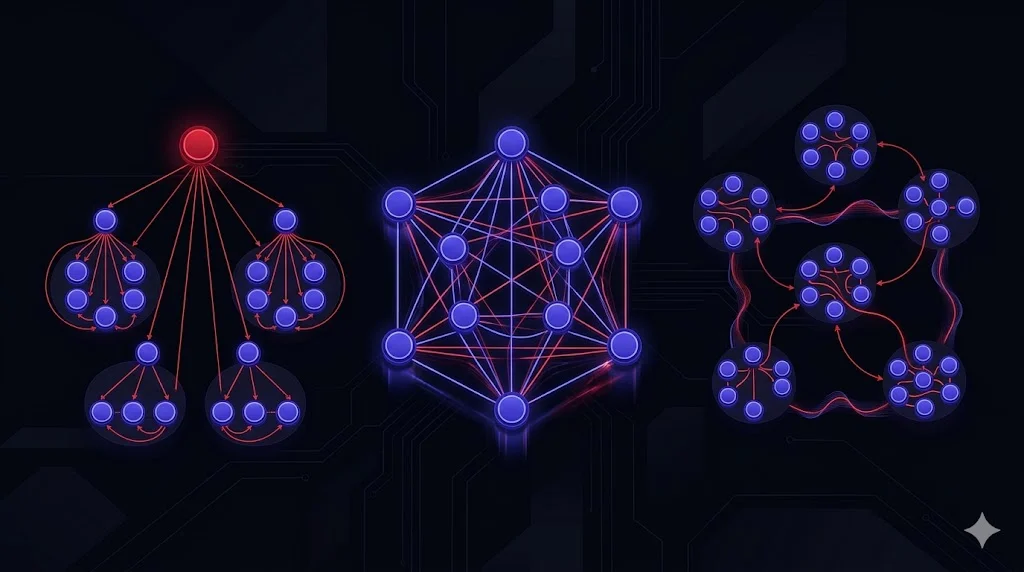
Three architectural models dominate:
Graph-based (LangGraph) - agents as directed graphs with explicit state. Nodes are steps; edges are transitions with routing logic. Strong for complex workflows, best production maturity.
Team / role-based (CrewAI, AutoGen) - agents as specialized roles (Researcher, Writer, Analyst, Reviewer) coordinating implicitly. Easier to start; harder to control routing at scale.
SDK-native / chain-based (Claude Agent SDK, OpenAI Agents SDK, LlamaIndex Agents, Semantic Kernel) - agents as provider-specific SDKs with native tool-calling loops. Deepest integration with specific LLM providers.
All 7 converged on MCP (Model Context Protocol) as the tool-integration standard in 2025-2026. Tools written as MCP servers are portable across frameworks.
The 7 Frameworks
LangGraph - The Production Workflow Framework
LangGraph (LangChain Inc., open source with commercial LangSmith observability) has emerged as the production-default for complex agent workflows in 2026.
Architecture: agents as StateGraph - explicit state (TypedDict or Pydantic), nodes (functions that read/write state), edges (conditional routing), cycles (retry/iteration), interrupts (human-in-the-loop).
Production capabilities:
- Persistent checkpointing to PostgreSQL / Redis / other stores
- Long-running agents with durable state across process restarts
- Subgraphs for composition and reusability
- Streaming state updates for UI responsiveness
- First-class human-in-the-loop via interrupt() and resume()
- LangSmith integration for tracing, evaluation, and production monitoring
Real 2026 users: Anthropic, Replit, Uber, Klarna, LinkedIn, Elastic, and many others running LangGraph in production.
Fit: most production agent workflows with moderate-to-high complexity. Default choice unless a specific reason favours an alternative.
CrewAI - The Role-Based Multi-Agent Framework
CrewAI models agents as role-based teams with human-readable abstractions.
Architecture: Crew containing Agent instances with role, goal, backstory; Task instances describing work; Process for coordination pattern (sequential, hierarchical).
Strengths:
- Fast onboarding - 30-minute tutorial productive
- Role-based framing matches how product teams think about agent design
- Growing MCP support
- Good for rapid prototyping and content/research workflows
Trade-offs:
- Less explicit control over routing than LangGraph
- Weaker production operations (checkpointing, state management) at scale
- Multi-agent coordination patterns are prescriptive rather than composable
Fit: rapid prototyping, content/research workflows, mid-complexity multi-agent teams. Many teams prototype in CrewAI then reimplement in LangGraph for production.
AutoGen - The Microsoft Research Framework
AutoGen (Microsoft Research, open source) pioneered multi-agent conversation patterns. In 2026 it has rebranded and evolved significantly - the original AutoGen is now primarily developed as AG2 / Agnostiq, with Microsoft continuing a separate internal track.
Architecture: agents as ConversableAgent instances exchanging messages; group chat patterns for multi-agent collaboration.
Strengths:
- Research-grade patterns for multi-agent conversation
- Strong message-passing abstraction
- Actively researched patterns for agent coordination
Trade-offs:
- Less mainstream production adoption than LangGraph or CrewAI in 2026
- Fragmentation (original AutoGen vs AG2 vs Microsoft fork) slowed enterprise adoption
Fit: research-heavy organizations; teams wanting conversation-oriented multi-agent patterns. Verify which fork you’re adopting; the ecosystem is more fragmented than it was in 2023-2024.
LlamaIndex Agents - The RAG-First Framework
LlamaIndex Agents is the agent capability of the LlamaIndex platform (originally a RAG indexing framework).
Architecture: agents built on LlamaIndex’s data abstraction - rich retrieval-augmented generation is the default context.
Strengths:
- Strong RAG integration out-of-the-box
- Native integration with LlamaIndex indexing and retrieval
- Good for agents that primarily query organizational knowledge
Fit: teams already on LlamaIndex for RAG wanting to extend into agents; agent use cases where knowledge retrieval dominates.
Claude Agent SDK - The Anthropic-Native Framework
Claude Agent SDK (Anthropic) is the Anthropic-native agent framework. Released in 2024 as an evolution of Claude Code’s internal architecture; matured significantly through 2025-2026.
Architecture: SDK-level primitives for tool-calling loops, file system access, web access, session management, artifact rendering, and Computer Use (visual GUI agents).
Strengths:
- Deepest integration with Claude (Sonnet 4.6, Opus 4.7, Haiku 4.5)
- Computer Use - visual GUI agents using Claude’s ability to see and interact with screen pixels
- MCP native - MCP clients and servers are first-class
- Built-in safety tooling - artifact rendering for output inspection, session audit trails
- Production-ready with Anthropic SDK and Claude Developer Platform backing
Fit: Anthropic-first production agents; teams deploying Claude for business-critical workflows; Computer Use scenarios.
OpenAI Agents SDK - The OpenAI-Native Framework
OpenAI Agents SDK is OpenAI’s native agent framework, evolved from the 2024 Assistants API and restructured in 2025 for standalone use.
Architecture: SDK primitives for tool-calling, file storage, code interpreter, web browsing, and agent handoff patterns.
Strengths:
- Deep integration with OpenAI models (GPT-5, GPT-4o, o3)
- Native Assistants API features (Code Interpreter, File Search, Web Browsing)
- Growing MCP support
- Strong documentation and ecosystem
Fit: OpenAI-first production agents; teams with existing OpenAI Assistants API investment; scenarios where Code Interpreter matters.
Semantic Kernel - The Microsoft Enterprise Framework
Semantic Kernel (Microsoft) is the .NET / C# / Python / Java enterprise agent framework. Strong fit for Microsoft-shop enterprises.
Architecture: plugins (tools), planners (routing), memory (state), prompts. Composable patterns with strong enterprise integrations.
Strengths:
- Native .NET / C# support (the best in the category for Microsoft shops)
- Strong integration with Azure OpenAI, Microsoft Graph, Azure AI Search
- Enterprise-grade documentation and Microsoft support
- Hybrid Python / C# / Java support
Fit: Microsoft-shop enterprises; .NET-heavy development teams; UAE public-sector organizations using Office 365 + Entra ID.
Comparison Matrix
| Framework | Architecture | Language | MCP | Observability | Production Maturity | 2026 Fit |
|---|---|---|---|---|---|---|
| LangGraph | Graph-based | Python / JS | Yes | LangSmith native | High | Default for complex workflows |
| CrewAI | Team / role-based | Python | Yes | Basic + integrations | Medium | Rapid prototyping, content |
| AutoGen / AG2 | Conversation-based | Python | Yes | Basic | Medium (fragmented) | Research / multi-agent chat |
| LlamaIndex Agents | RAG-first | Python | Yes | LlamaIndex observability | Medium-High | RAG-heavy agents |
| Claude Agent SDK | SDK / chain | Python / TS | Native | Anthropic tooling | High | Anthropic-native production |
| OpenAI Agents SDK | SDK / chain | Python / TS | Yes | OpenAI platform | High | OpenAI-native production |
| Semantic Kernel | Plugin-based | .NET / Python / Java | Yes | Microsoft ecosystem | High | Microsoft-shop enterprises |
Multi-Agent Patterns
Patterns for agents working together:
Sequential - Agent A does X, then Agent B does Y with A’s output. Simplest pattern. All frameworks support natively.
Hierarchical / Manager - a Manager agent orchestrates sub-agents, delegating tasks and evaluating outputs. CrewAI’s hierarchical process pattern; LangGraph via supervisor subgraphs; AutoGen’s GroupChatManager.
Parallel / Fan-out - multiple agents work on sub-problems simultaneously, results aggregated. LangGraph via map-reduce pattern; CrewAI via async task execution.
Adversarial / Debate - agents argue opposing positions to stress-test conclusions. AutoGen conversation patterns; LangGraph with explicit debate nodes.
Reflection - an agent critiques its own output and iterates. LangGraph cycles; CrewAI review tasks.
For 2026 production, LangGraph’s explicit graph model gives the strongest control over which pattern applies where. Less explicit frameworks (CrewAI, AutoGen) make pattern switching harder at scale.
Tool-Use Safety
Tool access is the dominant attack surface in production agents (see our AI agent security guide). Framework safety posture matters:
- Scope tool permissions to minimum required per agent step
- Validate tool outputs before feeding back to LLM (treat tool responses as untrusted input)
- Approval gates for consequential actions (send email, modify data, invoke payment)
- Separate instructions from data - system prompts vs user input vs tool output
LangGraph’s explicit state model and interrupt() primitives make this most natural. Claude Agent SDK has built-in safety patterns via artifact rendering and approval workflows. Less-opinionated frameworks (CrewAI, AutoGen) require more safety-engineering work on top.
Observability
Production agents need rich observability - every LLM call, every tool call, every state transition should be traceable.
LangSmith (LangChain / LangGraph) - native tracing, evaluation, and production monitoring. Strongest first-party observability in the category.
Claude Anthropic platform - session capture and audit trails for Claude Agent SDK deployments.
Arize Phoenix, W&B Weave, Braintrust - framework-agnostic observability (see LLM evaluation framework benchmark).
For CBUAE-regulated deployments requiring model-governance evidence, strong observability is not optional - inspectors expect audit trails of agent decisions.
UAE Compliance: CBUAE AI Guidance and Agents
CBUAE’s February 2026 AI Guidance applies fully to AI agents. Key agent-specific considerations:
- Model inventory - every agent in production must be inventoried, risk-tiered, and mapped to applicable principles
- Human oversight - higher-stakes agent decisions require HITL; lower-stakes can be HOTL; documented classification required
- Third-party vendor DD - if using Claude Agent SDK, OpenAI Agents SDK, or MCP servers from vendors, collect vendor DD artefacts (model cards, evaluation evidence, residency attestation)
- Agent-specific evaluation - test agents for multi-step failure modes beyond individual LLM output quality (tool-call correctness, state management, approval workflow integrity)
- Board-level accountability - designated committee with agent-specific governance visibility
For CBUAE-regulated deployments, LangGraph or Claude Agent SDK are the dominant 2026 production choices because both support the necessary HITL + observability + safety patterns natively.
Recommended Stacks
Early-stage AI startup (Series A)
- CrewAI for rapid prototyping
- Migrate to LangGraph for production
- MCP servers for tool integration
- Arize Phoenix for observability
Mid-stage AI-native product (Series B-C)
- LangGraph as primary framework
- Claude Agent SDK or OpenAI Agents SDK for provider-specific features (Computer Use, Code Interpreter)
- MCP servers (internal + community) for tool integration
- LangSmith for observability
- aiml.qa + genai.qa for evaluation and red-teaming
UAE regulated enterprise (bank, fintech, government)
- LangGraph for primary production agents (explicit state + HITL)
- Claude Agent SDK for Claude-first deployments
- MCP servers with access controls (Vault-issued credentials, per-agent scoped permissions)
- LangSmith + Arize Phoenix for observability with UAE residency
- Model inventory tracking in accordance with CBUAE AI Guidance
- Validation engagement via aiml.qa, red-team engagement via genai.qa
- Agent security assessment via pentest.ae
Microsoft-shop enterprise
- Semantic Kernel for .NET-native agents
- Azure OpenAI as LLM provider for Azure UAE North residency
- MCP servers increasingly supported
- Azure Monitor + Sentinel for observability
What Frameworks Don’t Solve
AI agent frameworks don’t automatically solve:
- Safety - you still have to design for safety; frameworks provide primitives, not guarantees
- Evaluation - you still need a dedicated evaluation framework (DeepEval, RAGAS, Promptfoo - see aiml.qa benchmark)
- Observability across non-agent code - frameworks cover agent steps; they don’t cover downstream service calls
- Cost management - LLM cost can escalate fast in agent loops; need cost-tracking instrumentation outside the framework
- Regulatory evidence - frameworks produce raw traces; compliance evidence needs curated review and documentation on top
Use frameworks for what they do. Build safety, evaluation, observability, and compliance layers on top of them.
How NomadX Delivers AI Agent Consulting
NomadX runs AI agent architecture and deployment engagements as fixed-scope sprints:
- 5-day AI Agent Readiness Assessment - evaluates current AI agent deployments or proposed use cases; produces framework selection, safety analysis, and roadmap
- 4-8 week AI Agent Implementation Sprint - designs and builds production agent system with selected framework (LangGraph, Claude Agent SDK, OpenAI Agents SDK, CrewAI, etc.); integrates MCP tool servers; deploys observability; establishes HITL patterns
- AI Agent Governance Programme - CBUAE-aligned agent inventory, risk-tier classification, third-party vendor DD, and board-visible model governance reporting
Every engagement coordinates with aiml.qa (evaluation), genai.qa (red-teaming), mlai.qa (ML architecture), and pentest.ae (agent security testing) as needed.
Book a free 30-minute discovery call to scope your AI agent engagement with NomadX.
Related Reading
- Google ADK vs OpenAI Agents SDK vs Pydantic AI vs LangGraph - the four-way enterprise deep dive on developer experience, durability, and lock-in
- How AI Agents Get Hijacked - prompt injection, tool poisoning, memory manipulation
- Model Context Protocol for Enterprise - MCP patterns for secure enterprise agent deployments
- CBUAE AI Guidance for UAE Banks - model governance checklist
- LLM Evaluation Framework Benchmark - DeepEval, RAGAS, Promptfoo for agent evaluation
Frequently Asked Questions
What is the best AI agent framework in 2026?
No single framework leads across every dimension. For graph-based orchestration with strong production maturity: LangGraph. For multi-agent team patterns with role-based abstraction: CrewAI. For research and conversation-driven agent patterns: AutoGen (now Agnostiq in 2026). For Anthropic-native production agents with built-in safety tooling: Claude Agent SDK. For OpenAI-native agents: OpenAI Agents SDK. For .NET shops: Semantic Kernel. Most production deployments in 2026 pick 1-2 frameworks matched to their LLM provider and agent pattern rather than maximizing feature coverage.
LangGraph vs CrewAI - which should I use?
Different strengths. LangGraph models agents as directed graphs with explicit state management - each node is a step, each edge is a transition. Strong for complex workflows with conditional routing, loops, and human-in-the-loop. CrewAI models agents as role-based teams (Researcher, Writer, Reviewer, etc.) with implicit coordination. Easier to start with, less powerful for complex routing. For production systems with complex flows and safety requirements: LangGraph. For rapid prototyping or simpler multi-agent collaboration patterns: CrewAI. Many teams prototype in CrewAI then reimplement in LangGraph for production.
What is LangGraph?
LangGraph is a framework for building stateful multi-step agent workflows as directed graphs. From the LangChain team, released as a standalone product in 2024 and matured significantly through 2025-2026. Key capabilities: explicit state management via TypedDict, conditional edges for branching logic, cycles for retry and iteration patterns, human-in-the-loop interrupts for approval workflows, persistent checkpointing to PostgreSQL for long-running agents, and first-class observability via LangSmith. Used by Anthropic, Replit, Uber, Klarna, and many others for production agents in 2026.
Is the Claude Agent SDK production-ready?
Yes. Anthropic released Claude Agent SDK in 2024 as an evolution of Claude Code's internal architecture and it has matured through 2025-2026 as the Anthropic-native agent framework. Strongest features: Computer Use (visual GUI agents), Model Context Protocol (MCP) native integration, built-in safety tooling, session management, artifact rendering. Best fit for Anthropic-model-native deployments. Less ecosystem depth than LangGraph for multi-provider or hybrid scenarios but excellent for Claude-first production agents.
What is Model Context Protocol (MCP)?
Model Context Protocol (MCP) is an open standard introduced by Anthropic in late 2024 for exposing tools, data sources, and capabilities to LLMs via a standardized server interface. Think of it as 'the USB-C port for AI agents' - any MCP-compliant agent framework can connect to any MCP server. In 2026, major frameworks (Claude Agent SDK, OpenAI Agents SDK, LangGraph, CrewAI) support MCP client or server patterns. MCP servers exist for GitHub, Slack, databases, internal APIs, file systems, and many more. MCP has become the default 2026 pattern for agent tool integration.
How do AI agent frameworks compare on safety?
Framework safety posture varies. Claude Agent SDK ships with Anthropic's built-in safety tooling (artifact rendering for inspection, session auditability, Computer Use safety constraints). LangGraph provides primitives for human-in-the-loop approvals and explicit state for auditability but safety is what you build on top. CrewAI and AutoGen are less opinionated on safety. OpenAI Agents SDK uses OpenAI's built-in content policy and tool-call validation. For CBUAE-regulated deployments requiring human-in-the-loop for high-impact decisions, LangGraph's explicit interrupt model or Claude Agent SDK's approval gates both work well.
Which AI agent framework is best for UAE enterprise deployments?
For CBUAE-regulated UAE enterprises (banks, SVFs, fintechs) in 2026: LangGraph or Claude Agent SDK are the dominant production choices. Both support human-in-the-loop patterns required for CBUAE AI Guidance's higher-stakes decisions, both have strong observability for model-governance evidence, and both integrate with MCP for controlled tool access. Pair with aiml.qa for validation and genai.qa for application-layer red-teaming. Avoid less-mature frameworks for customer-facing regulated deployments until they have equivalent safety and observability capabilities.
Are agent frameworks necessary or can I just write tool-calling code directly?
For simple single-turn tool calling, you can use the LLM provider's native tool-calling API directly (OpenAI function calling, Anthropic tool use). For multi-step workflows with state, routing, error recovery, and human-in-the-loop, frameworks provide the abstractions that prevent your tool-calling code from becoming a state machine nightmare. As a rule: if your agent has more than 3-4 decision points or needs any persistent state, adopt a framework. Under that complexity, native tool-calling is simpler and has fewer dependencies.
Complementary NomadX Services
Get Started for Free
Schedule a free consultation with our AI agents team. 30-minute call, actionable results in days.
Every engagement is scoped by our principal architect, Adrian Vale: 20+ years in production engineering, 40+ professional certifications. Meet Adrian
Talk to an Expert